
Tag Archives: AmeriServ Radon Mitigation of Iowa

FRAP Scorecard – What is it?

What is the Federal Radon Action Plan Scorecard?
radon testing in iowa, dangers of radon, radon mitigation

Since 2011, the federal government has been implementing the Federal Radon Action Plan (FRAP). In February 2016, they posted a Scorecard to report on the status of radon testing and radon mitigation activities implemented under FRAP. The scorecard records commitments based on their final status, green for complete and red for incomplete.

It also discusses the six commitments that will be continued under the National Radon Action Plan (NRAP), which took over the FRAP plan after 2016. The three green-marked commitments will either be expanded to include new strategies or simply continued and tracked. The three red-marked commitments will be addressed under current  NRAP programs.

Six Commitments Tracked by FRAP

Following are the six commitments defined by FRAP and a brief discussion of their progress.

  1. Testing tribal residences and schools for radon and educating Tribes of radon risk –The Bureau of Indian Affairs, has done radon testing on about  30% of approximately 3500 residences and 500 schools for the presence of radon. The remaining 70% are expected to be completed by 2020 and will be tracked and reported.
  2. Deducting radon testing and mitigation costs with the Health Care Savings Accounts (HSAs) – Because radon can have significant health-related effects, the IRS is currently working with the EPA to determine which expenses related to radon reduction can be deducted as medical expenses.
  3. Providing a radon mitigation cost set-aside through the VA’s Home Loan Guarantee Program – Although the VA has considered this action, it has determined that it is not feasible under current budget limitations. It will continue to prioritize work with guidelines for new construction programs and Minimum Property Requirements (MRP), which will be tracked and reported.
  4. Testing for radon in HUD public and assisted housing – While HUD currently lacks funding to perform radon tests as a part of its inspections of public and assisted housing, it is committed make this a standard part of the inspection process and will continue to explore its feasibility under NRAP.
  5. Creating a website to Increasing overall public awareness of radon in homes – Currently the EPA, HUD, USDA and HHS are collaborating on a website that works with existing campaigns to increase public awareness of the prevalence of radon and known health risks of radon in homes. The launch date of this website is as yet not determined.
  6. Engaging with the philanthropic organizations to promote public awareness of radon – The EPA, HUD and USDA is working to develop public-private partnerships to support programs to increase public awareness and reduce the presence and risks of radon in homes. So far efforts have been largely unsuccessful.

Radon Basics in Iowa

The Basic Facts About Radon

Radon is a colorless and odorless gas that forms from the decay of uranium in rocks and
Radon mitigation in Iowa by AmerServ Radon Mitigationfilling the soil with radon. The entire state of Iowa is in the red zone for radon, meaning that every county in Iowa has the potential for higher than normal level of radon.

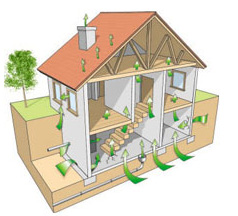
Radon can damage lung tissue, which increases the risk of lung cancer. It is estimated that there are 20,000 lung cancer death per year in the United States caused by radon. Radon can enter your home in many ways. Some of these are:

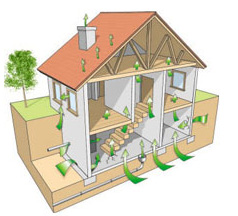
  • Cracks in the walls
  • Cracks in the floor
  • Gaps around pipes
  • Construction joints
  • Cavities inside the walls

Radon coming up through the soil and into your home, will build up and be trapped. The effects of radon can go completely unnoticed for years after exposure. Some of the symptoms that you may have from high levels of radon are:

  • Wheezing
  • Persistent cough
  • Heavy breathing
  • Lung infections

Even if you don’t have any of these symptoms, doesn’t mean that you aren’t being harmed by high level of radon. A radon level of 4 picocuries per liter (pCi/L) or higher is cause for concern. Even a level of 4 pCi/L can pose a risk. It is important to have a professional come and test your home for radon. The experts at AmeriServ Radon Mitigation has the equipment and expertise to come and test your home and offer radon mitigation to get this harmful gas out of your home.

Solutions for High Radon Levels in Your Iowa Home

AmeriServ Radon Mitigation can come and test your home through either short-term testing or long-term testing. S

Short term testing is done using several different methods:

  • Charcoal canisters – these canisters containers activate charcoal. Radon is absorbed into the charcoal and then is measured
  • Electret ion chamber – this method is used to measure radon in water
  • Continuous monitors – this monitors hour by hour measurement of radon
  • Liquid scintillation detectors – this method is similar to charcoal measurement except the analysis is accomplished by treating the charcoal with scintillation fluid and then analyzing the fluid using scintillation counter.

Short term testing is usually completed in 2 to 3 days.

Long term testing will last for 90 days or more. Radon can fluctuate through the year due to weather conditions, operation of furnaces and fireplaces and the opening and closing of windows and doors. Long term testing gives a more accurate reading to tell you your home’s year-round average radon level. Long term testing is done one of two ways:

  • Alpha track
  • Electret detectors

If the testing shows that your home is high in radon, AmeriServe Radon Mitigation will install a radon mitigation system. This system is done by drilling a hole in your foundation which creates a suction point. Then a PVC pipe is connected through this hole to use as a vent for the radon gas. A fan is then connected to the pipe to ensure that the air flow is in the right direction. This system will direct the radon from your home to the outside.

Don’t let radon become a health issue to you and your family. Let the professionals at AmeriServ Radon Mitigation test your Iowa home and offer you the solution you need to get this harmful gas out of your home. Contact us today!

A Citizen’s Guide to Radon in Iowa

Protecting Yourself and Your Family From Radon

Radon causes thousands of lung cancer deaths in the United States each year. The entire
Radon mitigation is Iowa by AmeriServ Radon Mitigationstate of Iowa is in the red zone which means that every county in Iowa is in the highest potential area of the United States for higher than average levels of radon. This is due to the fact that Iowa has uranium-rich soil. Radon is formed when the uranium and radium in rocks decays, filling the soil with radon.

You cannot see, smell or taste radon so you won’t know if your have a high radon level unless your home is tested. It causes thousands of deaths a year because when you breathe air that contains radon, it can cause lung cancer. Radon is the second leading cause of lung cancer in the United States, second only to smoking. If you smoke and your home has high radon level, you have an even higher risk of developing lung cancer. There are several ways that radon gets into your home. They are:

  • Cracks in floors
  • Cracks in walls
  • Construction joints
  • Gaps in suspended floors
  • Gaps around pipes
  • Water supply
  • Cavities inside walls

Once radon enters your home, it becomes trapped and builds up. A radon level of 4 picocuries per liter (pCi/L) or higher is cause for concern. Even radon levels less than 4 pCi/L poses a risk. It is important to get your Iowa home tested for radon. The experts at AmeriServ Radon Mitigation  can come and test your home and offer radon mitigation to keep your radon levels low.

Solutions For High Radon Levels in Iowa

AmeriServ Radon Mitigation can test your home using short-term testing of long-term testing.

  • Short-term testing: This testing remains in your home for 2 to 90 days, using either charcoal canisters, alpha track, electret iron chamber, continuous monitors and charcoal liquid scintillation detectors. This type of testing may not determine a year-round average. Many times, short-term testing is done for real estate transactions.
  • Long-term testing: This testing remains in your home for more than 90 days and give a more accurate year-round average of your radon levels. This testing includes alpha track and electret detectors.

If the testing finds that your home has elevated levels of radon, the AmeriServ team can install a radon mitigation system to remove the harmful radon from your home.

The first step in radon mitigation is to drill a hole in your foundation to provide a suction point. Next, we attach a PVC pipe to the hole to act as a vent then the pipe is connected to a fan. The fan allows the air to flow in the right direction, out of the home.

It is important to get your Iowa home tested for radon, and have a professional perform radon mitigation if the levels are high. Protect yourself and your family from health issues related to radon. Let the professionals at AmeriServ Radon Mitigation test your home.

The AmeriServ team is professionally trained by the State of Iowa and is certified by the Iowa Department of Public Health. Don’t hesitate to contact AmeriServ to get your home tested for radon and keep you and your family safe from this harmful gas.


Radon Test Kit vs. Professional Radon Testing in Iowa

Why Choose Professional Radon Testing in Iowa

Each year, around 400 Iowans die from exposure to radon, a naturally produced gas. Radon is formed when the uranium and radium in rocks decays, filling the soil with radon. When buildings are constructed on radon-rich soil, the radon escapes into the home through foundation cracks, sump pumps, or gaps and spaces around pipes. This creates a dangerous environment for you and your family. If your home is one of the five out of seven homes in Iowa infected with dangerous levels of radon, it is important to call the experts at Ameriserv Radon Mitigation today.

You cannot see, smell, or taste radon; this makes it even more of a threat to the well-being of your family. Homes with elevated levels of radon are nearly impossible to detect without professional radon testing. There are a couple different types of testing, short-term testing, and long-term testing.

  • Short-Term Testing: This type of test usually remains in your home for 2 to 90 days, depending on which kind of test you use. The types of devices used for short-term testing are “charcoal canisters,” “alpha track,” “electret iron chamber,” “continuous monitors,” and “charcoal liquid scintillation” detectors. Short-term tests may not determine year-round average radon level, but are great for getting quick results.
  • Long-Term Testing: These tests remain in your home for more than 90 days. Common long-term test devices include “alpha track” and “electret” detectors. Long term tests take longer, but are much more likely to give you your home’s year-round average radon level.

Radon Testing in Iowa by Ameriserv Radon Mitigation The first step is to determine whether or not there is a radon problem in your home. This can be done either by DIY methods, or by calling a professional radon mitigation expert to administer professional tests. Radon testing kits are very affordable, but the results may vary. In some cases, if you are just trying to determine whether or not to invest in radon prevention systems, DIY radon testing may be the option for you.

However, if you are looking to sell your home, or your DIY tests showed elevated radon levels and you want confirmation, professional tests should be considered. The radon mitigation experts at Ameriserv can provide reliable tests to see if your home is in need of professional radon mitigation services. The extra cost is definitely worth it, as professional radon testing can help you determine the extent of the radon problem in your home.

What to do once you test positive for Radon in Iowa

If you find that your home has elevated levels of radon, it is important to contact a radon mitigation expert immediately. The Ameriserv team installs a radon mitigation system to remove any harmful radon from your home as fast as possible. First, we will drill a hole in your foundation to provide a suction point. Next, we will attach a PVC pipe to the hole to act as a vent and connect the hole to a fan. This fan promotes air flow in the right direction. Once this system is installed, it is important to seal foundation cracks and any gaps and spaces to prevent radon from the soil from making its way into the home.

Contact us today for more information on our premiere radon testing and mitigation services in Iowa.

Choosing an Iowa Radon Company

Iowa Radon Company

Radon is a concern for many homeowners and businesses in the state of Iowa. The Environmental Protection Agency (EPA) has ranked all of Iowa as high risk for high levels of radon. Radon is a natural radioactive gas that can cause cancer. With radon, you can not see it, smell it, or taste it and that is why it is such a worry. If your home or business has radon and you breathe it over a long period of time, it becomes a health risk. It is a leading cause of lung cancer in non-smokers and smokers.

Radon comes from the natural breakdown of uranium and radium in soil, rock and water. Air pressure is lower in your home than the pressure in the soil around your foundation. This difference in pressure acts like a vacuum by drawing the radon in through the foundation cracks and openings. The radon gets trapped in your home and builds up causing the problems. AmeriServ Radon Mitigation of Iowa has found it in new construction of homes and businesses, as well as, older construction. The first line of defense is to get your home tested by a reputable Iowa radon company to make sure the levels are less than 4.0PCi/L. Testing is the only way you will know for sure if you, your family or employees are at risk from radon.

When choosing an Iowa radon company, you will need to make sure the company and staff are fully licensed and insured. AmeriServ Radon Mitigation Iowa has the staff that can answer your questions and concerns. Their team is trained by the State of Iowa and certified by the Iowa Department of Public Health. They use the latest technology in radon mitigation to test your home and solve your radon issues. The qualified staff of AmeriServ Radon Mitigation of Iowa can install systems in new construction to prevent radon entering your home from the beginning.

If you are considering doing home improvements, this might be the time to have your home tested and have mitigation solutions installed in your home. As a real estate agent, you should inform your clients of possible testing by an Iowa radon company that could be done before selling or buying a home. School radon testing can be done by the experienced staff at AmeriServ Iowa Radon Mitigation. If radon can get into your homes it can get into your schools. Children’s lungs are still developing and the danger is much higher for them than an adult. The technicians are qualified to test for radon in the schools in your area and create a solution to lower the levels of radon.

AmeriServ Radon Mitigation of Iowa is the Iowa radon company to choose for your testing and radon mitigation. They are highly trained, professional, and guarantee their work. Give them a call about your concerns and let them solve your radon issues that influence your quality of life for you and your family.