
Tag Archives: DIY radon testing kits

Radon Detector vs. Professional Radon Testing – Which is Right for Your Iowa Home?

Radon Detectors and Testing Services in Iowa

If you are concerned about radon levels in your home, the best thing you can do is invest in some sort of radon test to determine whether or not your home actually contains elevated radon levels. There are a variety of ways that this can be done – home radon testing kits and detectors, short-term professional tests, and long-term professional tests. The hard part is deciding which radon testing method to use in your home. That is why Ameriserv offers the necessary information and wide variety of solutions to help you choose the best option for your Iowa home.

Some of the different options that you can choose from to test the radon levels in your home include:

  • DIY Radon Kits and Detectors: Home radon tests can give you an idea of the radon levels in your home. These tests are usually left in your home somewhere undisturbed for 48 – 96 hours. To use these tests, you must close all of the doors and windows in the area. Most of the tests also require that you send them in to a lab in order to get the results. Here at Ameriserv, we offer a $15 at home radon testing kit. Contact us for more information on this and our other radon testing services.
  • Short-term testing: This kind of test takes around 2-7 days (some can take up to 90 days), and is used to measure average radon levels in your home over a short time period. Short-term testing methods include charcoal canisters, electret ion chambers, continuous monitors, and liquid scintillation detectors.
  • Long-term testing: This testing method, which usually takes over 90 days, is used to track average radon levels in your home year round. Long-term testing can be done of a high radon level was found with another testing method, or to find more accurate results. Testing methods include electret monitors and alpha track detectors.

These are some of the common methods used to test for radon in Iowa homes. If you are looking to sell your home, you should consider investing in at least short-term radon testing, to ensure there are no dangerous levels of radon in your home. If there have been high levels of radon in your home before, you may want to consider a long-term radon test to see how severe this issue is. If you are just trying to ensure the safety of your family and want to be sure there is not a high amount of radon in the air, a DIY radon detector may be the way to go for you.

Average Outside Air Level of Radon pCi/L. in Iowa
Radon Testing and Detector Solutions in Iowa by AmeriservRadon is a dangerous, colorless, and odorless gas that can cause several health problems for you and your family. Though no level of radon is considered completely safe, it is common for outside air levels to be around 0.2 pCi/L. This is a relatively small number when compared with indoor radon levels, which are commonly somewhere around 1-2 pCi/L.

If there is a radon level of over 4 pCi/L in your home, it means that the radon levels in your home are dangerously elevated. Have your home tested immediately to determine whether or not there is a radon issue there.

Ameriserv offers quality radon testing, detectors, and mitigation services for your home. Contact us today to see how we can help you get rid of the radon in your Iowa home.
Radon Testing: Kit or Professional?

Best Options for Radon Testing in Iowa

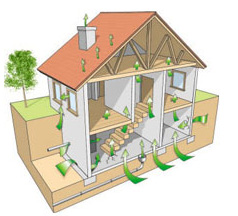
Radon levels in Iowa are dangerously high: research has found that five out of seven homes in Iowa contain an elevated level of radon. This naturally produced gas comes from the decay of uranium and radium in many different kinds of rocks. These rocks are located all over the state, making it common for radon to seep radon into the soil around your home. If the radon in this soil is allowed to enter your home through foundation cracks; exposed soil in the crawlspace; gaps and spaces between the walls, floor, doors, and windows; or through well water, it could pose a significant threat to the health of you and your family. Second only to smoking, radon is one of the most common causes of lung cancer. Do not take any chances. Have your home tested for radon immediately.

Solutions for Radon Exposure in Iowa Homes by Ameriserv

There are a couple of different ways to determine whether the levels of radon in your home are dangerously high. Radon levels above 4 pCi/L are considered dangerous, and steps should be taken to reduce radon if such a high concentration is found in your home. The best options for testing radon levels in your Iowa home are:

  • Home Radon Testing Kits: These DIY radon test kits are an easy and inexpensive option that can be used if you want to see if radon is a problem in your home. The kits usually cost around $9 –  $40. To use these kits, you need to ensure that all windows and doors are closed, and put the detector somewhere in your home where it can remain without disturbance for 48 to 96 hours. After following the directions with the kit, you will most likely have to send the detector to a lab an await results.
  • Professional Short-Term Testing: Professional testing is a good option if you want more reliable results, or if you are going to be selling your home. This test usually takes around 2-7 days, but could remain in your home up to 90 days. Short-term tests use one of many radon detecting devices to monitor radon levels over a short period of time, giving you an idea of the average radon levels in your home. It is best to use a variety of testing methods to be sure about the results.
  • Professional Long-Term Testing: Long-term testing methods use devices that stay in your home for over 90 days. Long-term tests are able to more accurately show you the average, year-round radon levels in your home. If you used a DIY radon kit, or had a short-term test done in your home and found elevated radon levels, consider following up with a long-term test.

While DIY radon kits can give you a good idea of the radon levels in your home, it is recommended to follow up and positive DIY tests with a professional radon test. Short-term test that show elevated radon levels should be followed by either a long-term test or another short-term test; if radon levels in your home are indicated to be significantly higher than the 4 pCi/L, have another short-term test done immediately to determine the best solution as soon as possible. If you are in the process of selling your home, it is especially important to have professional radon tests done, as the benefits of radon testing may help improve the appeal of your home.

What to do if Radon Exposure is High in Your Iowa Home

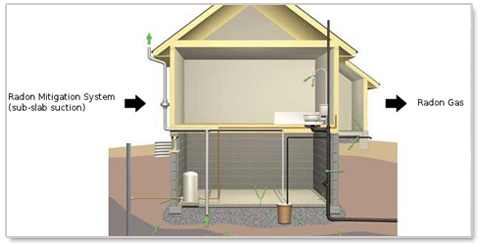
If the DIY tests show a high concentration of radon in your home, you should have a professional radon mitigation specialist visit the home right way. The team at Ameriserv is dedicated to removing dangerous radon from your home to ensure the safety of you and your family. We will help determine where the radon is entering the home and install a radon mitigation system that is customized to your home. Common radon mitigation techniques involve drilling a hole in the slab for radon to escape the home, and using fans and PVC ventilation systems to collect radon in the air and channel it out and away from the home.

Contact Ameriserv for more information today. We are happy to provide the residents of Iowa with our professional radon mitigation and testing services.