
Category Archives: Radon Mitigation

Facts About the National Radon Action Plan

What is the National Radon Action Plan?national radon action plan, radon testing and mitigation ia
Through the collaboration of a variety of groups including the American Lung Association, Environmental Protection Agency, Department of Health and Human Services, Cancer Survivors Against Radon, and many others, the Radon Action Plan has been created. This plan was created to be a strategy for radon education and prevention.

Radon is a radioactive gas that is odorless, colorless, and tasteless. It is created through the decomposition of uranium that occurs naturally in the soil. The gas often seeps through cracks in your business or home’s foundation and can cause a variety of health issues if left to its own devices. The most serious of which being lung cancer. Radon is known to take the lives of 21,000 people every year. The Nation Radon Action Plan wants to drastically reduce and hopes to eliminate those numbers altogether.

Radon Risks and Prevention

Radon is known to be the second leading cause of lung cancer, right behind smoking. For nonsmokers it is the number one cause of lung cancer. In order to protect yourself and your family, your home may need regular radon testing. Radon testing is the only way to tell if your home has dangerous levels of radon gas. Testing your home for radon is cheap and easy, so there is no reason to not have it done. If your home is found to have high levels of gas, your home will likely need a radon mitigation system. This is a series of fans and vents that will rid your home of radon, therefore decreasing the levels of radon and protecting your business or home’s inhabitants from the health risks.

To learn more about the National Radon Action Plan, click here. For radon testing or radon mitigation services, you can contact us here at Ameriserv Radon Mitigation of Iowa. Because Iowa is known to have the highest average levels of radon in the United States, with the majority of homes having dangerous levels, radon testing is a necessity. We can provide you with both radon testing and radon mitigation services. Contact us today for more information!
January: Radon Action Month

Take Action Against Radon in Januaryradon testing in iowa

The governor of Iowa, Terry Branstad, has formally declared that January will become Radon Action Month. The state of Iowa is known for its high and even dangerous levels of radon in its homes and the governor wants to bring attention to it. Radon is a radioactive, odorless, colorless, and tasteless gas that comes from the decomposition of uranium in the earth.

Radon enters homes through the foundation. It can seep through cracks and other small openings. High levels of radon gas in a home can eventually lead to health issues such as lung infections and even lung cancer. It is known to be the second leading cause of lung cancer, right behind smoking cigarettes. It is the leading cause of lung cancer in nonsmokers.

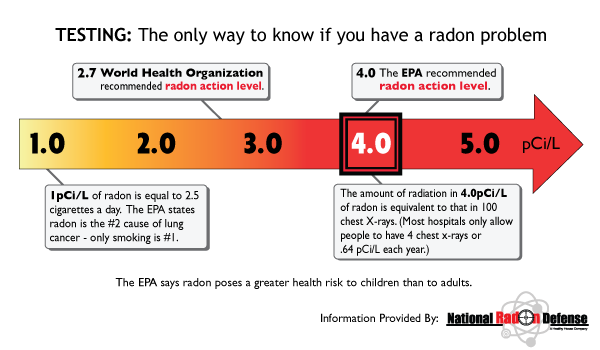
So, how do you know if your Iowa home has dangerous levels of radon gas? Radon testing is a relatively inexpensive way to know if your home’s radon levels are too high. These tests can and should be performed in homes, businesses, and schools. According to the EPA, 50% of Iowa homes have elevated radon levels. It is likely that your home has high levels of radon. The EPA has stated that any home with a 4.0 pCi/L or higher is in danger. Get your home tested today. Make sure your future is safe.

Radon Testing and Mitigation in Iowa

If you order a test and find that your home or business has a hazardous level of radon gas, radon mitigation is your best bet to get rid of it. Radon mitigation is a series of vents and fans that can be installed into your home or business to rid the space of radon gas. Ameriserv of Iowa can offer both radon testing and radon mitigation for your Iowa home. We are a business that specializes in radon. We are a skilled and experienced team of professionals, so make sure to contact us today for all your radon testing and mitigation needs. Our service area covers all of Iowa. Give us a call! We want to see all of Iowa with safe homes. Take action against radon today!

EPA Announces Radon Plan

EPA Cracking Down on RadonEPA radon testing, mitigation, iowa

Recently, the EPA announced its collaboration with groups such as the American Lung Association and the American Association of Radon. Because radon is known to be the second leading cause of lung cancer–right behind smoking–these groups have gotten together to help reduce radon induced lung cancer deaths. Through education and radon reduction strategies, the EPA hopes to reduce radon related deaths. They are determined to prevent 3,200 deaths annually by 2020.

Radon gas is a stealthy killer; you can’t smell, taste, or see it. It also does not produce symptoms, even minor ones–such as a headache. It will only produce symptoms when it is too late. Regardless you should watch for persistent cough, wheezing, heavy breathing, and lung infections. That is why education and radon testing for homes is so important. Iowa is known to have some of the highest levels of radon in the United States. On average, the levels in most Iowa homes are above the EPA red-zone, a 4.0 pCi/L. Anything above a 4.0 is considered dangerous.

Iowa Radon Testing and Mitigationradon testing, mitigation in iowa

So, what should you do to keep you and your family safe and healthy? Regular radon testing is the first step. Contact us here at Ameriserv Radon, we can provide radon testing for your Iowa home. Radon testing is inexpensive, so it is a smart and responsible investment in your home and your family. We can also answer questions you may have about radon gas, radon testing, and radon mitigation. If you happen to find radon in your home after testing, do not panic. It can be fixed. Radon mitigation systems can be installed in your Iowa home. Radon mitigation is a way to expel the radon gas from your home. We can help determine which type of system is right for your Iowa home.

Contact us today to learn more about radon gas, radon testing, or radon mitigation. We have a team of experienced specialists who want to help educate the public on the dangers of radon. Our service area covers most of Iowa, including Carroll, Des Moines, Ames, Grinnell, and more. Ameriserv Radon is your radon expert for the state of Iowa. Give us a call today!

Radon in Your Home? Don’t Panic! We know what to do.

How To Test Your Home For Radon

If you are concerned about high radon levels in your home, here’s what you can do.Radon testing Carroll Iowa

First of all, don’t panic! Although radon is dangerous, it is very easy to get rid of. You can do at-home testing as well as hire a professional to take care of it for you. Radon is found in most Iowa homes. It is everywhere, you can’t avoid it, but you can get rid of it over time.

Here is how to test your home for radon. You can start with a do-it-yourself test. You can purchase a radon test kit from almost any hardware store or your local health department. It is wise to perform multiple tests as one test may not be accurate. Radon levels tend to fluctuate, so you may want to do more than one test over a period of time to find the average radon level in your home.

If your first test comes back with levels between 4 and 8 pCi/L, you should immediately follow up with another test. If you need quick results, a short term test can take 2-7 days. Long term tests can take from 3 months to a year, which will give you the most accurate results if you are willing to wait that long. The higher your levels, the sooner you should test again. You can also have a professional inspector come in and test the radon levels in your home.

After you have tested for radon various times and have a good average number of the radon levels in your home, it’s time to get it properly treated. You will want to hire a professional, well-trained, and licensed mitigation contractor to remove radon from your home. If you are on a budget and a true “do-it-yourselfer”, there are resources online published by professionals that you can use. If this interests you, check out Infeltec INC.

Inspect for Radon Before Selling Your Home

Selling Your Home & Inspecting for Radon

Radon is a colorless and odorless deadly gas that is attributed to be the leading cause of lung cancer for non-smokers. This deadly substance has made its way into more than half of the homes in Iowa, although many homeowners may be unaware of its inconspicuous entrance. It is accountable for 20,000 to 25,000 deaths per year in the United States, and can cause physical and mental issues in the development of infants and young children. Not only is radon extremely hazardous to you and your family’s health, but it can may influence your potential to sell your home.

Researchers on this radioactive gas have noticed that it can be found in new and old homes alike. Whether your home has insulation or not, a basement or not, it is still prone to radon entrance. Sometimes, there are extremely high levels of radon in a new home, but none found in an old one. So as you can see, the age of your home does not affect the radon level. Rather, it is completely dependent on the soil underneath your home. Radon occurs naturally when uranium is broken down in the soil, and then enters through any cracks or openings in your foundation. If the inside of your home has a lower air pressure than the soil outside, your home will be more apt to take in radon. Radon can also be released in water through your sink or shower, though this is not as high of a risk as when it comes through the soil. Rarely, your granite or concrete can give off radon.

Will High Radon Levels Influence Potential Buyers?

Selling your home and radon detection

When it comes to real estate, it is important to inspect for radon before selling your home. Potential buyers in Iowa should be aware that radon is a major current issue in most homes. Make sure there is a mutual understanding between you and your potential buyer about how radon levels will be taken care of.

Depending on your state’s disclosure laws, you may be required to include your home’s radon levels in your sale disclosure. If you have not had your home tested for radon, and levels come up high in the home inspection, your potential buyers may have the right to cancel if they are not satisfied with the results. In this case, in order to save the deal, you may have to pay for the radon to be removed or make a mutual agreement with your potential buyer on splitting the difference. If your potential buyers walk away from the contract, you will be obligated to include radon levels in your next sale disclosure, which may turn away other potential buyers.

Fortunately, it isn’t very challenging to get rid of high radon levels, although it may be expensive. Typically, it will cost 1,000 to 2,000 to have radon removal equipment installed by a professional. It may be wise to take care of radon levels in your home and include what you spent in your asking price before listing your home. A home that is radon-clear will be very attractive to a potential buyer and can allow for a smoother process.

New Construction Requires Radon Mitigation Systems in Iowa

Come to AmeriServ for your New Construction Needs

new construction radon mitigation

A new bill is in the works in Iowa that would make it mandatory for radon mitigation systems to be pre-installed in new construction homes. Iowa is known to have some of the highest average radon levels in the United States, so this bill would help lower radon poisoning across the state. If it goes unchecked, radon can lead to a variety of health problems. Radon gas is known to be the second-leading cause of lung cancer in the United States.

So how does radon gas get into your home? Well, radon gas is a naturally occurring gas that travels up through the earth and through foundation cracks where it gets trapped in your home. Unfortunately, radon is a colorless and odorless gas, so it can not be detected through sight or smell. Radon testing is the only way to tell. AmeriServ does offer a variety of radon testing options to help you quickly and accurately identify if you have radon gas in your home.

Radon Mitigation in Iowa’s New Construction

If it is found that your home contains radon gas, the best way to rid your home is through radon mitigation, which is a system of vents and pipes that expels radon gas. With this bill, a radon mitigation system will be mandatory in all new construction. If the homeowner believes there is radon gas, or gets a positive test for radon, all they would have to do is turn the system on, making radon much less of a threat in these Iowa homes.

If you are in need of a radon mitigation system for your new construction home, or in your existing home, make sure to call AmeriServ. We also offer radon testing for a quick and accurate result. Don’t let radon ruin your life, get regular radon tests, and come to AmeriServ for all your new construction radon mitigation needs. Our service area covers a large part of Iowa. Contact us today to learn more!

What to Do When You Suspect You Have Been Exposed to Radon?

Radon Exposure in Iowa

Radon Exposure and Health Risks in IowaElevated levels of radon in your home could be a major health concern for you and your family. Five out of every seven homes in Iowa have elevated levels of radon in them. Every year, about 400 Iowans die due to radon exposure, which is the number two cause of lung cancer. This is why it is so important to make sure that your home is free of radon. Ameriserv can help you with all of the tests and precautions to prevent radon from causing health issues for you and your family.

We offer several different options for radon testing as well as radon
mitigation. Our professionals can administer short-term and long-term tests to check the radon levels in your home. We also offer a $15 dollar at home radon detector kit so that you can begin the radon testing process on your own.

By what should you do if you think you may have been exposed to radon? The first step to take if you suspect radon exposure is to look for the common symptoms that are associated with prolonged exposure to high levels of radon. These symptoms include:

  • Lung Infections
  • Persistent cough
  • Wheezing
  • Heavy breathing

These are a few of the common signs that you may have been exposed to radon. If you are experiencing any of these signs, it is important to seek help immediately in order to prevent any further health problems. Mor information on the health risks of radon can be found on the EPA Radon Guide webpage.

What to Do to Prevent Radon Exposure in Your Iowa Home

Most major health problems associated with radon take several years to develop. That is why it is vital to take care of any radon problems in
your home right away to prevent prolonged exposure.

Radon Mitigation in Iowa to Prevent Health ProblemsThis can be done by first administering radon tests in your home. If you think you have already been exposed to radon, it may be wise to try a short-term radon test. This can give you an idea of the radon levels in your home. If the test results show a high radon level, contact a professional for further testing, or to have a radon mitigation system installed.

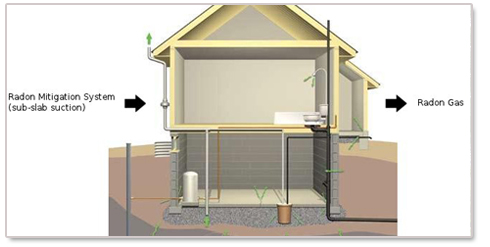
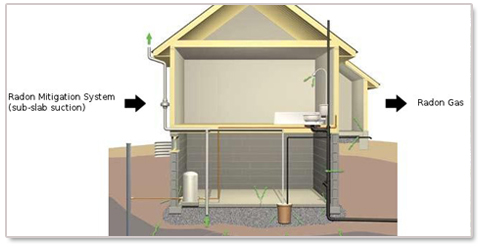
Ameriserv can install a radon mitigation system to effectively reduce the amount of radon in your home. To install this system, we drill a hole in your foundation to create a suction point. Next, attach PVC pipe to the hole to act as a vent for the gas. A fan is then used to make sure that the air flow is properly directed. With this system running continuously, radon will be able to exit your home, reducing the health risks for you and your family.

Contact the experts at Ameriserv for more information on what to do if you suspect a radon issue in your home, and check out the EPA Radon Guide for even more information. We offer quality testing and
mitigation services to those in the Cedar Rapids, Iowa area.

The Real Cost of Radon vs. The Cost of Radon Mitigation

The Dangers of Radon Outweigh the Cost of Radon Mitigation

No one wants to spend money on things like radon mitigation. Most people would rather buy a movie, a new phone, a TV, or just go out to dinner. Unfortunately, you need to think twice before ignoring radon and radon mitigation. You have probably heard of radon and its dangers. If you have not here are a few facts about radon. Radon is:

Radon Testing Gurtherie Center IA, Radon Mitigation Gutherie Iowa

  • Radioactive
  • Colorless
  • Odorless
  • Tasteless
  • Naturally occurring
  • Easily inhaled

Basically, it is a dangerous gas that can not be detected except by radon testing. Radon appears when when the chemicals uranium and thorium, which reside in the earth, begin to decay. It is a gas that sticks to dust particles and other surfaces, sometimes radon can even affect your home’s water supply. It has been known to cause lung cancer if it goes unchecked in your home, business, or school. In fact, there are 21,000 deaths per year in the USA due to radon-induced lung cancers. That is a scary thought. Radon may not even effect you until years, or even decades, after you are exposed. Some signs of radon exposure are:

  • Persistent cough
  • Wheezing
  • Heavy breathing
  • Lung infections

What is even scarier is that Iowa is known to have naturally high levels of radon. This is because a long time ago there were glaciers that covered Iowa. They melted and left behind rocks that contained uranium and when they broke down and decayed they released the radon gas. If radon occurs in your home, business, or school, it could harm your family, customers, or students and staff. This is why you should consider getting your Iowa home, business, or school tested for the presence of radon. Luckily, Ameriserv can help you get radon testing and mitigation for your Iowa home.

Get Radon Mitigation in Iowa by Ameriserv

By getting regular radon testing you will be able to keep almost constant tabs on your home, business, or school’s radon levels. Radon tests will tell you whether or not the radon levels are dangerous. While any radon is not exactly safe, a level of 4 pCi/L is considered dangerous to the health of a building’s inhabitants. If your radon levels are at 4 pCi/L or higher you will need to receive radon mitigation.

Radon mitigation is a process that removes the radon from your home, business, or school and releases to the outside air where it will no longer pose a danger to you, your family, customers, or students and staff. The actual radon mitigation system is installed into your home, business, or school. There are a few different options, and we can help you, by doing a radon test, pick which option will be best for your structure.

Come to Ameriserv today to get a radon test, and if needed to get radon mitigation. Remember that radon is not something to be ignored. It may be tasteless, odorless, and colorless, but that does not mean it is not there. Radon can seriously harm a person’s health, especially if it goes unchecked. So, get radon testing today, because it is the best way to prevent radon in your home, business, or school. Call Ameriserv today to learn more about our radon tests, radon mitigation, radon mitigation costs in Iowa, or our service area. Contact us today!

Radon Basics in Iowa

The Basic Facts About Radon

Radon is a colorless and odorless gas that forms from the decay of uranium in rocks and
Radon mitigation in Iowa by AmerServ Radon Mitigationfilling the soil with radon. The entire state of Iowa is in the red zone for radon, meaning that every county in Iowa has the potential for higher than normal level of radon.

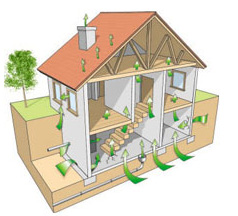
Radon can damage lung tissue, which increases the risk of lung cancer. It is estimated that there are 20,000 lung cancer death per year in the United States caused by radon. Radon can enter your home in many ways. Some of these are:

  • Cracks in the walls
  • Cracks in the floor
  • Gaps around pipes
  • Construction joints
  • Cavities inside the walls

Radon coming up through the soil and into your home, will build up and be trapped. The effects of radon can go completely unnoticed for years after exposure. Some of the symptoms that you may have from high levels of radon are:

  • Wheezing
  • Persistent cough
  • Heavy breathing
  • Lung infections

Even if you don’t have any of these symptoms, doesn’t mean that you aren’t being harmed by high level of radon. A radon level of 4 picocuries per liter (pCi/L) or higher is cause for concern. Even a level of 4 pCi/L can pose a risk. It is important to have a professional come and test your home for radon. The experts at AmeriServ Radon Mitigation has the equipment and expertise to come and test your home and offer radon mitigation to get this harmful gas out of your home.

Solutions for High Radon Levels in Your Iowa Home

AmeriServ Radon Mitigation can come and test your home through either short-term testing or long-term testing. S

Short term testing is done using several different methods:

  • Charcoal canisters – these canisters containers activate charcoal. Radon is absorbed into the charcoal and then is measured
  • Electret ion chamber – this method is used to measure radon in water
  • Continuous monitors – this monitors hour by hour measurement of radon
  • Liquid scintillation detectors – this method is similar to charcoal measurement except the analysis is accomplished by treating the charcoal with scintillation fluid and then analyzing the fluid using scintillation counter.

Short term testing is usually completed in 2 to 3 days.

Long term testing will last for 90 days or more. Radon can fluctuate through the year due to weather conditions, operation of furnaces and fireplaces and the opening and closing of windows and doors. Long term testing gives a more accurate reading to tell you your home’s year-round average radon level. Long term testing is done one of two ways:

  • Alpha track
  • Electret detectors

If the testing shows that your home is high in radon, AmeriServe Radon Mitigation will install a radon mitigation system. This system is done by drilling a hole in your foundation which creates a suction point. Then a PVC pipe is connected through this hole to use as a vent for the radon gas. A fan is then connected to the pipe to ensure that the air flow is in the right direction. This system will direct the radon from your home to the outside.

Don’t let radon become a health issue to you and your family. Let the professionals at AmeriServ Radon Mitigation test your Iowa home and offer you the solution you need to get this harmful gas out of your home. Contact us today!

A Citizen’s Guide to Radon in Iowa

Protecting Yourself and Your Family From Radon

Radon causes thousands of lung cancer deaths in the United States each year. The entire
Radon mitigation is Iowa by AmeriServ Radon Mitigationstate of Iowa is in the red zone which means that every county in Iowa is in the highest potential area of the United States for higher than average levels of radon. This is due to the fact that Iowa has uranium-rich soil. Radon is formed when the uranium and radium in rocks decays, filling the soil with radon.

You cannot see, smell or taste radon so you won’t know if your have a high radon level unless your home is tested. It causes thousands of deaths a year because when you breathe air that contains radon, it can cause lung cancer. Radon is the second leading cause of lung cancer in the United States, second only to smoking. If you smoke and your home has high radon level, you have an even higher risk of developing lung cancer. There are several ways that radon gets into your home. They are:

  • Cracks in floors
  • Cracks in walls
  • Construction joints
  • Gaps in suspended floors
  • Gaps around pipes
  • Water supply
  • Cavities inside walls

Once radon enters your home, it becomes trapped and builds up. A radon level of 4 picocuries per liter (pCi/L) or higher is cause for concern. Even radon levels less than 4 pCi/L poses a risk. It is important to get your Iowa home tested for radon. The experts at AmeriServ Radon Mitigation  can come and test your home and offer radon mitigation to keep your radon levels low.

Solutions For High Radon Levels in Iowa

AmeriServ Radon Mitigation can test your home using short-term testing of long-term testing.

  • Short-term testing: This testing remains in your home for 2 to 90 days, using either charcoal canisters, alpha track, electret iron chamber, continuous monitors and charcoal liquid scintillation detectors. This type of testing may not determine a year-round average. Many times, short-term testing is done for real estate transactions.
  • Long-term testing: This testing remains in your home for more than 90 days and give a more accurate year-round average of your radon levels. This testing includes alpha track and electret detectors.

If the testing finds that your home has elevated levels of radon, the AmeriServ team can install a radon mitigation system to remove the harmful radon from your home.

The first step in radon mitigation is to drill a hole in your foundation to provide a suction point. Next, we attach a PVC pipe to the hole to act as a vent then the pipe is connected to a fan. The fan allows the air to flow in the right direction, out of the home.

It is important to get your Iowa home tested for radon, and have a professional perform radon mitigation if the levels are high. Protect yourself and your family from health issues related to radon. Let the professionals at AmeriServ Radon Mitigation test your home.

The AmeriServ team is professionally trained by the State of Iowa and is certified by the Iowa Department of Public Health. Don’t hesitate to contact AmeriServ to get your home tested for radon and keep you and your family safe from this harmful gas.